
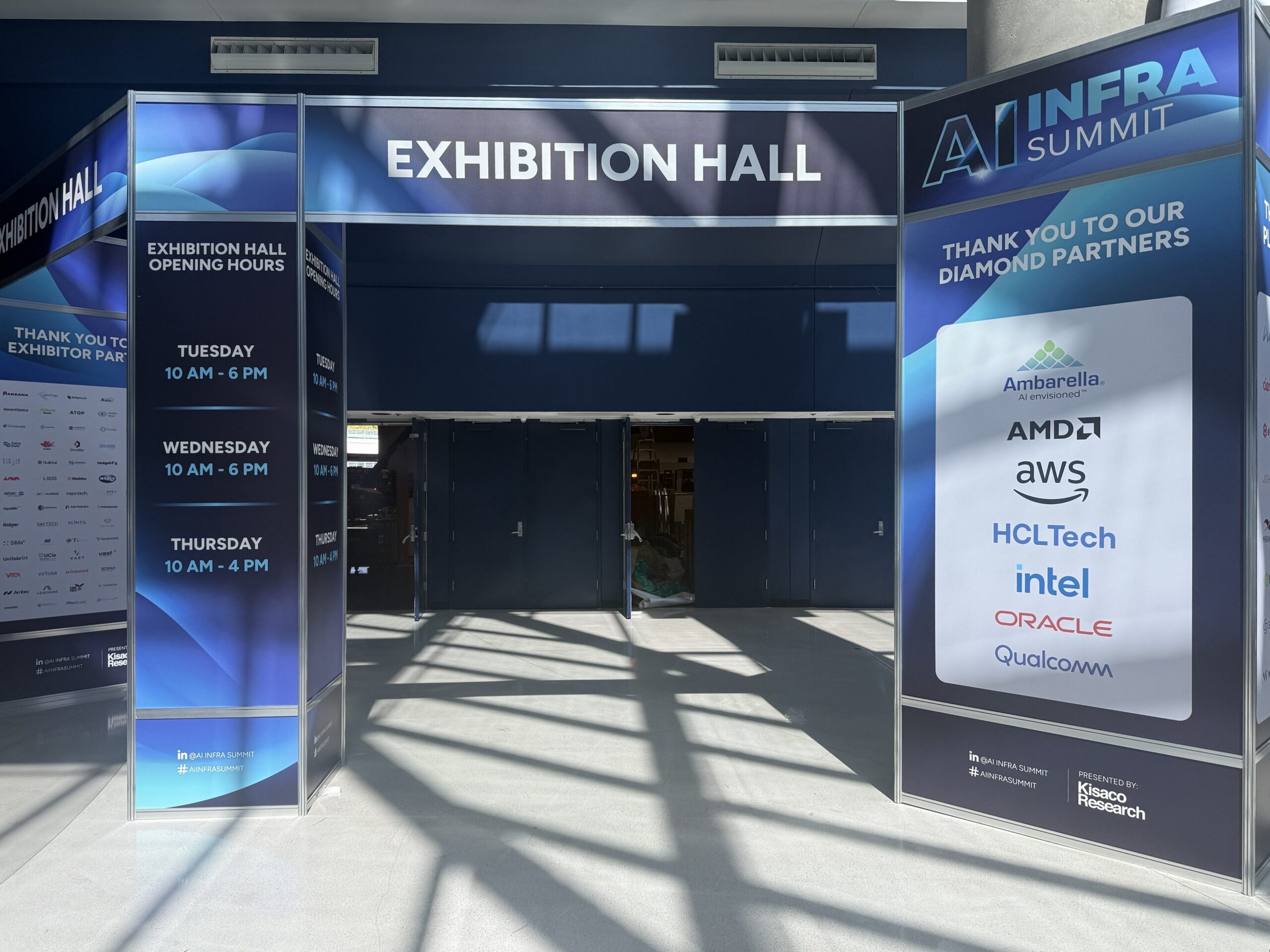
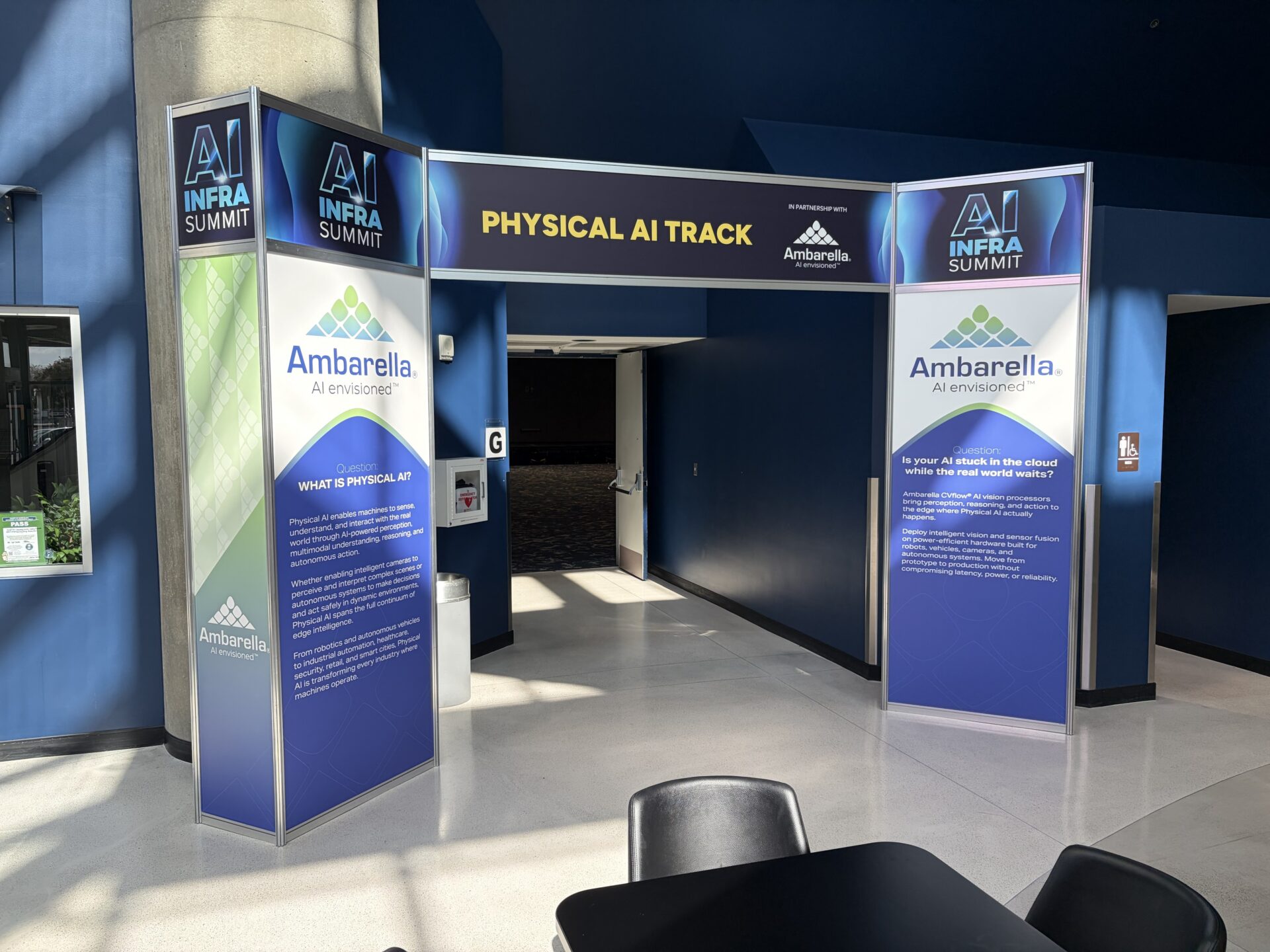
Ambarella had a major presence at this year’s AI Infrastructure Summit in Santa Clara, bringing our Physical AI story to one of the industry’s leading gatherings for AI infrastructure, hardware, software, and deployment.
As a Diamond sponsor, Ambarella was highly visible throughout the event, with our logo featured prominently across the venue alongside companies including AMD, AWS, HCLTech, Intel, Oracle, and Qualcomm. But our presence went well beyond branding. Across the show floor, main stage, Physical AI track, media briefings, and networking events, the team demonstrated how Ambarella is helping move AI from prototypes into real-world systems operating at scale.
Physical AI in action
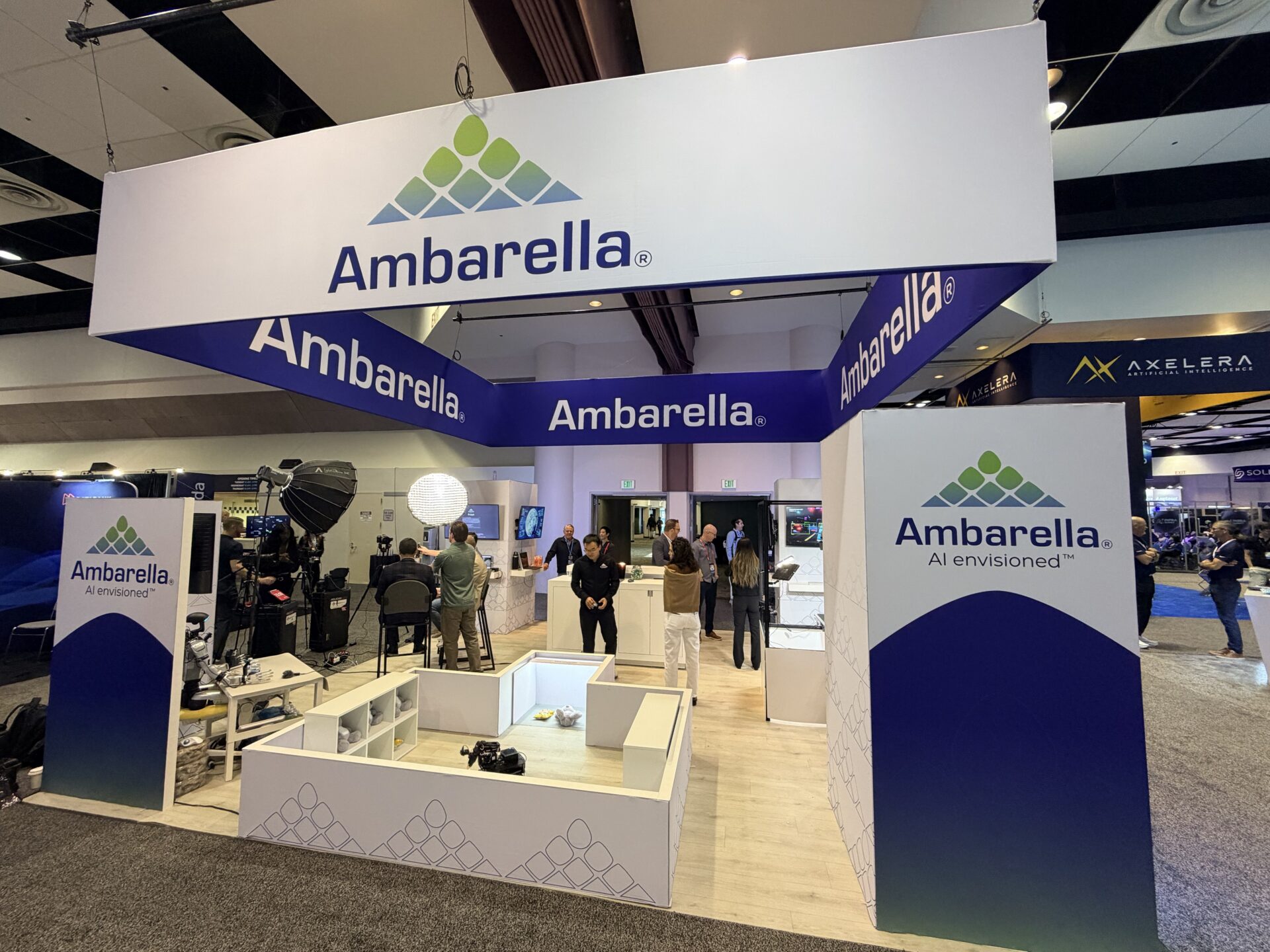
At the Ambarella booth, attendees saw a broad range of demonstrations spanning robotics, enterprise AI, logistics, security, and automotive applications.
Our N1-655 powered an autonomous mobile manipulator robot running SmolVLA, SLAM, navigation, and pick-and-place workloads on a single chip. Another demo brought intelligent vision, perception, and voice-driven interaction to a Unitree humanoid robot, completing an AI-driven vision-to-action loop directly on the device.
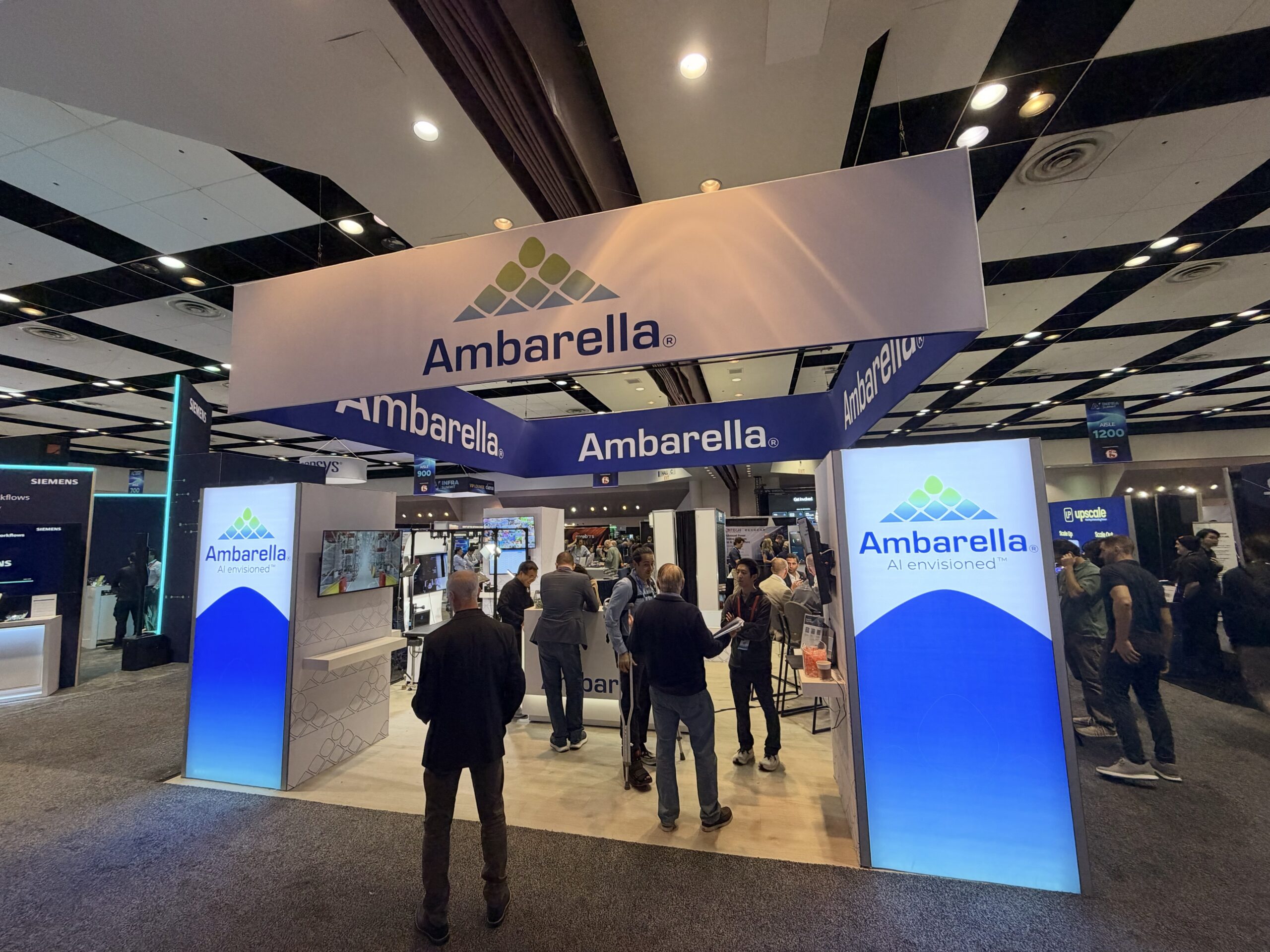
Partner demonstrations further highlighted the growing ecosystem around Ambarella. Together with ZEDEDA, Roboflow, and Liquid AI, we demonstrated how cloud-native software, computer vision, language models, and centralized orchestration can come together on power-efficient edge devices. A warehouse application combined Dify, Liquid AI models, live video, and RAG on the N1-655 to turn real-time observations and historical context into actionable enterprise insights.
Other demonstrations included a 360-degree warehouse barcode scanning system, 64-channel natural-language video search, and Thinkware’s Harmony QXD1 Plus dashcam powered by the Ambarella CV25 Edge AI SoC.
Bringing Physical AI to the stage
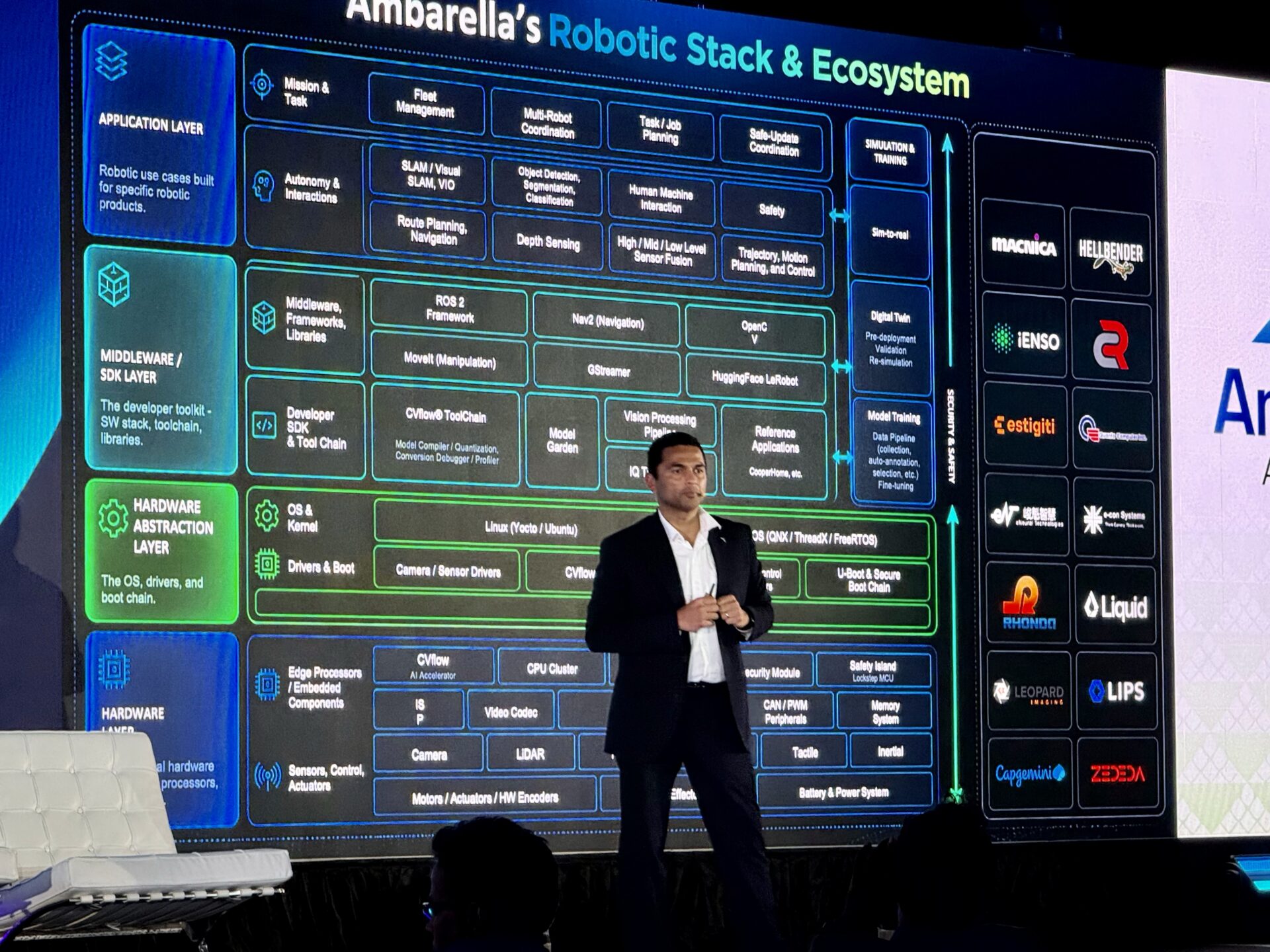
Ambarella also played a central role in the summit’s Physical AI programming.
Customer Growth Officer Muneyb Minhazuddin took the Main Stage for “Where Physical AI Meets Production Scale: 50 Million AI Deployments and Growing!”, highlighting Ambarella’s experience moving AI from development into deployed systems across cameras, vehicles, drones, robots, and other edge devices.
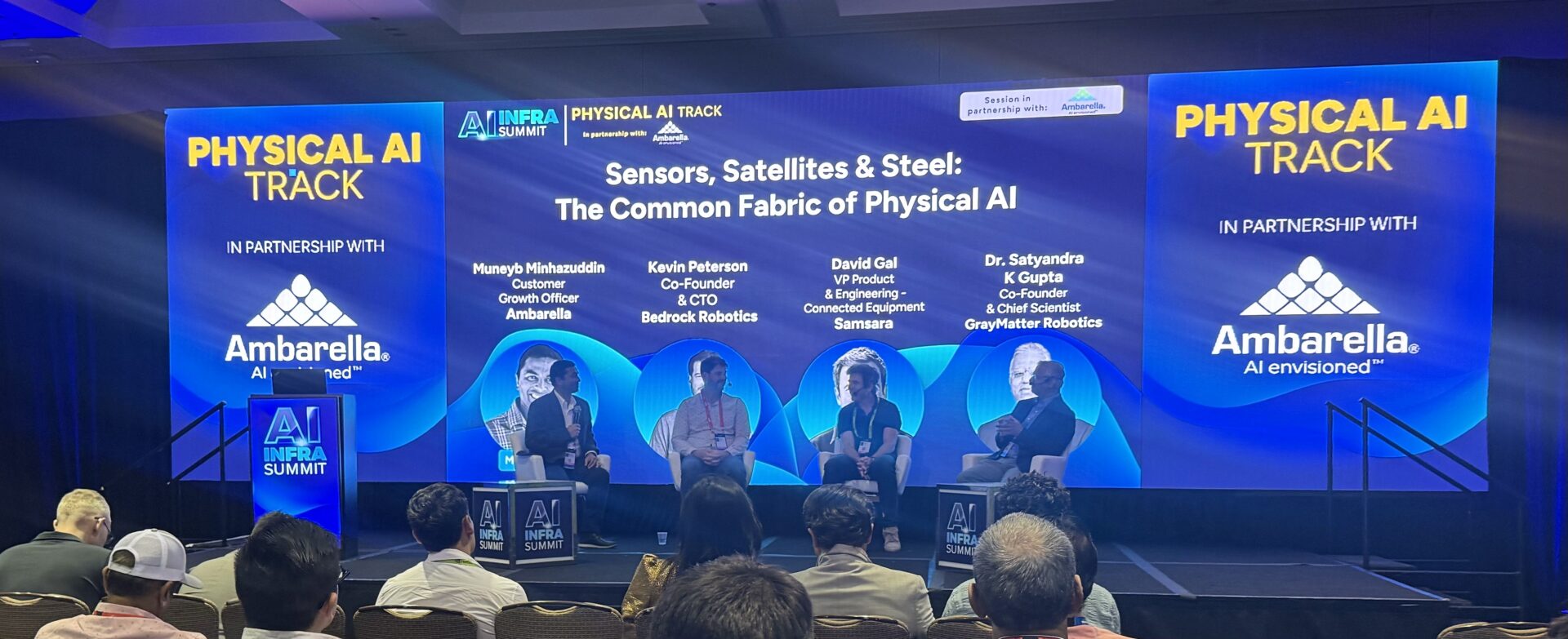
Muneyb also moderated the Physical AI track panel, “Sensors, Satellites & Steel: The Common Fabric of Physical AI,” featuring leaders from Bedrock Robotics, Samsara, and GrayMatter Robotics. The discussion explored the common infrastructure requirements emerging across very different Physical AI applications.
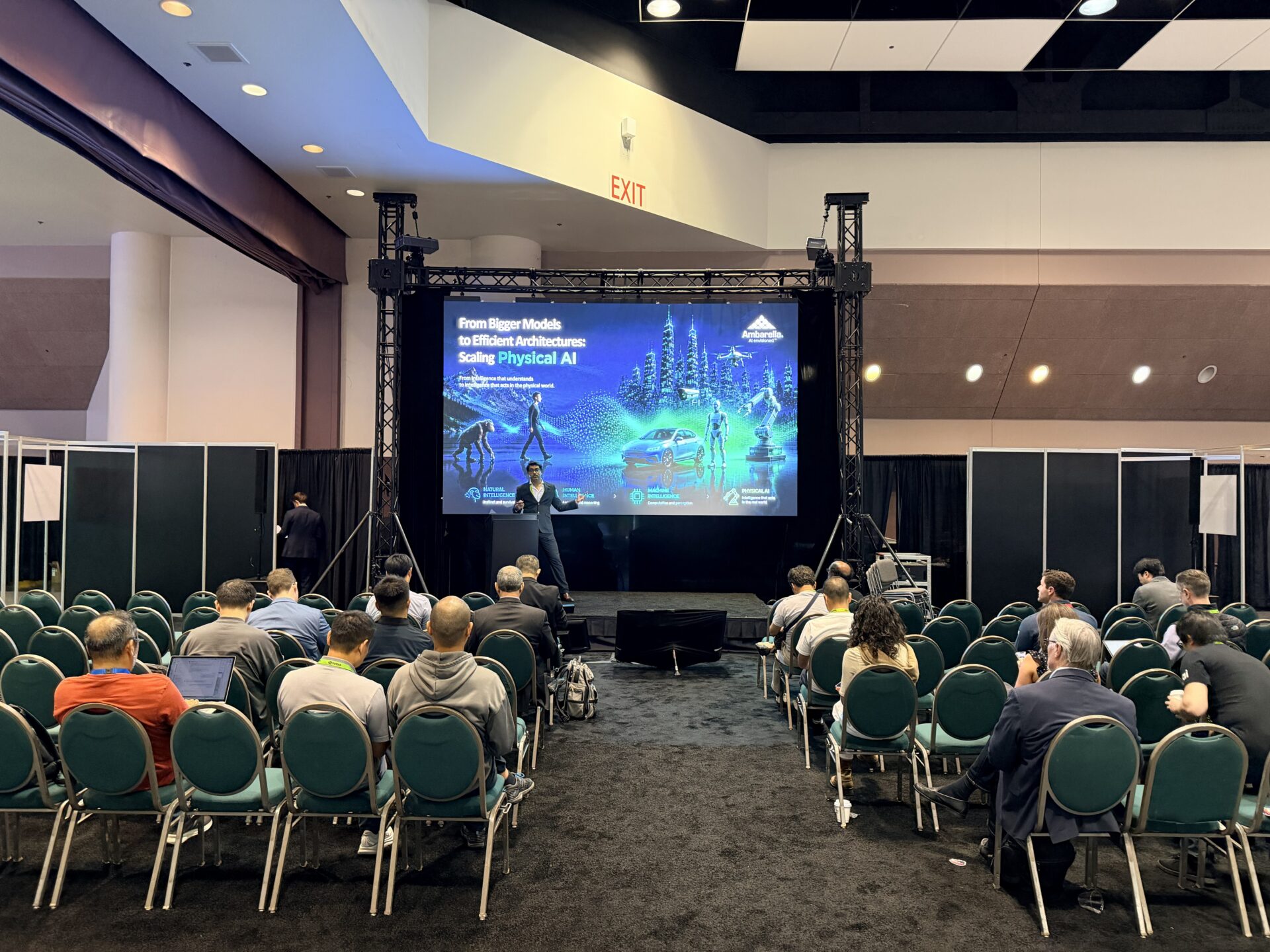
On Day 2, Director of Product Amit Badlani presented “From Bigger Models to Efficient Architectures: Scaling Physical AI,” examining why Physical AI requires a different approach to scaling—one built around efficient models, sensor-aware architectures, real-time inference, and the balance between accuracy, latency, compute, and power.
The event concluded with our Physical AI Networking Reception, including a Q&A led by Muneyb with executives from Samsung, Samsara, Google Cloud, and ZEDEDA.
Expanding the Ambarella Ecosystem
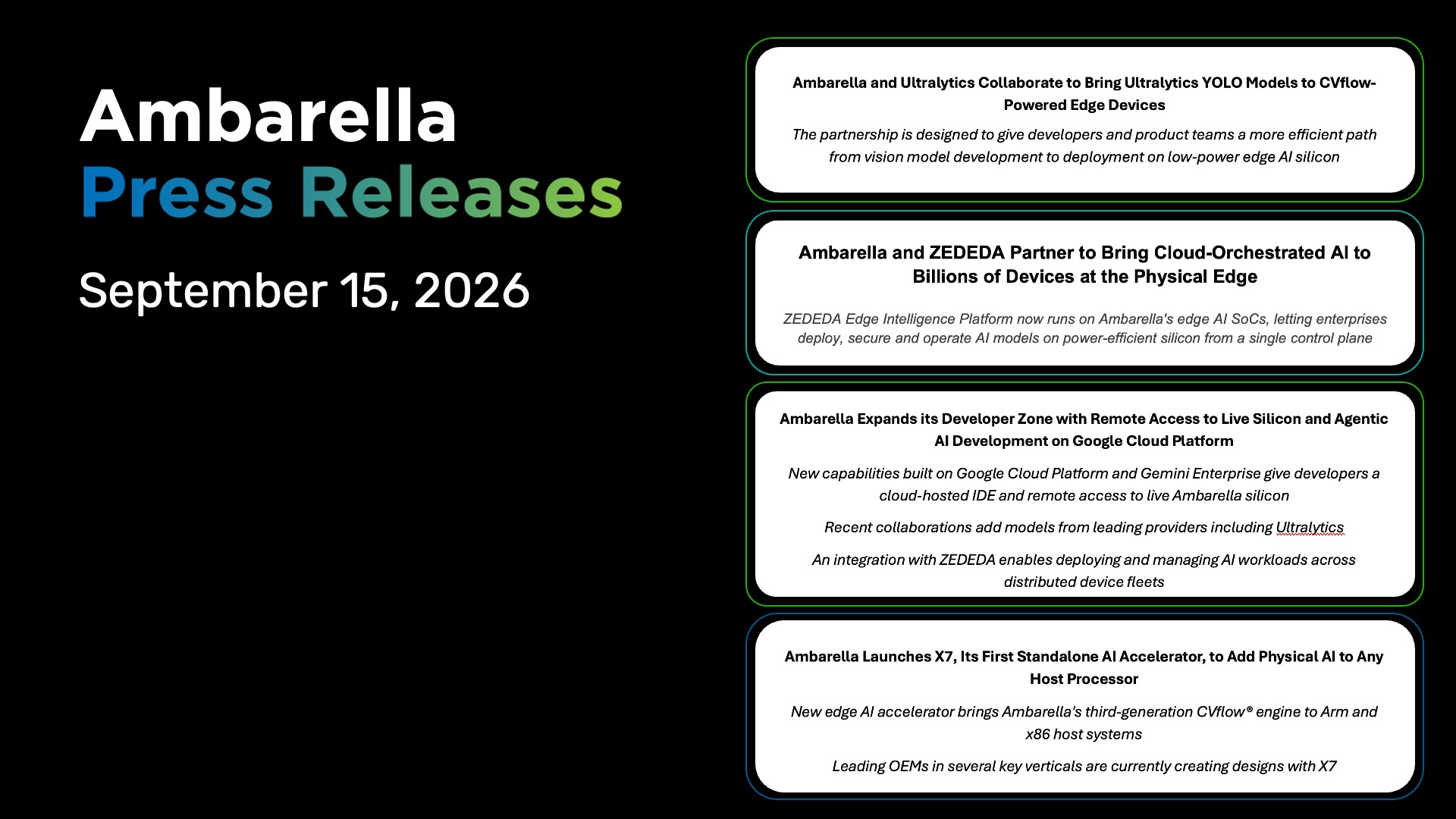
The summit also provided the backdrop for several major announcements that reinforce Ambarella’s strategy for helping developers build, deploy, and manage Physical AI systems at scale.
We announced a collaboration with Ultralytics to bring YOLO models to CVflow-powered edge devices; expanded the Ambarella Developer Zone with remote access to live silicon and agentic AI development on Google Cloud Platform; introduced the X7, Ambarella’s first standalone AI accelerator; and announced a partnership with ZEDEDA to bring cloud-orchestrated AI to devices at the physical edge.
Together, these developments extend the Ambarella ecosystem from efficient AI silicon and developer tooling through optimized models, cloud-based development, and fleet-scale orchestration.
Taking the story beyond the show floor
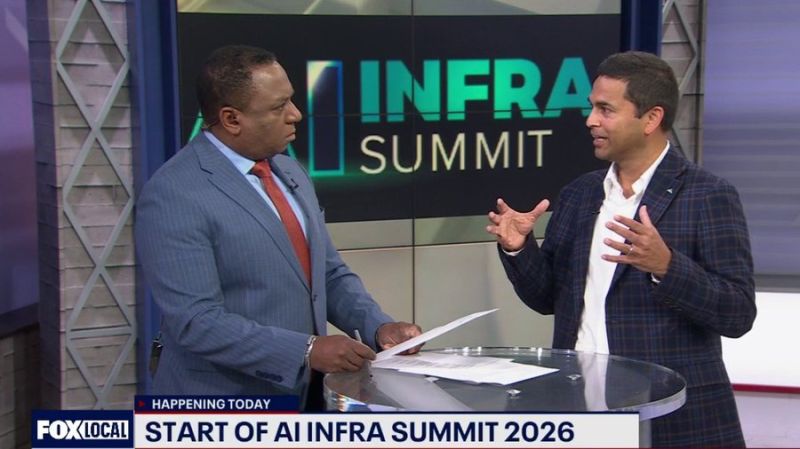
Our Physical AI message also reached a broader audience through media coverage during the summit.
Muneyb joined KTVU FOX 2 San Francisco to discuss how AI is moving beyond computers and into the physical world—and how the next chapter of AI will be about translating intelligence into real-world action.
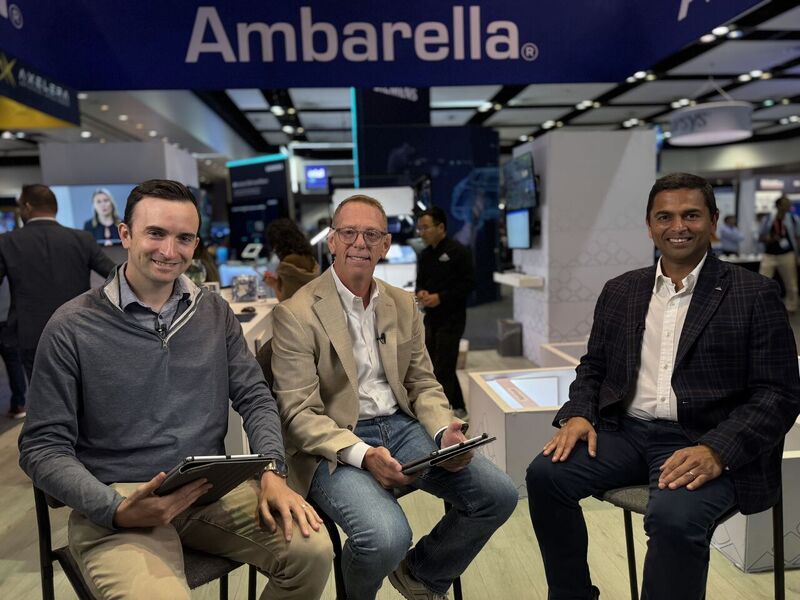
He also joined Brendan Burke and Matthew Kimball of Six Five Media for a deeper conversation on what separates a Physical AI prototype from a deployable product. The discussion covered Ambarella’s approach to power and memory efficiency, developer tooling, and the importance of building AI systems that can operate reliably for years across thousands of deployed devices.
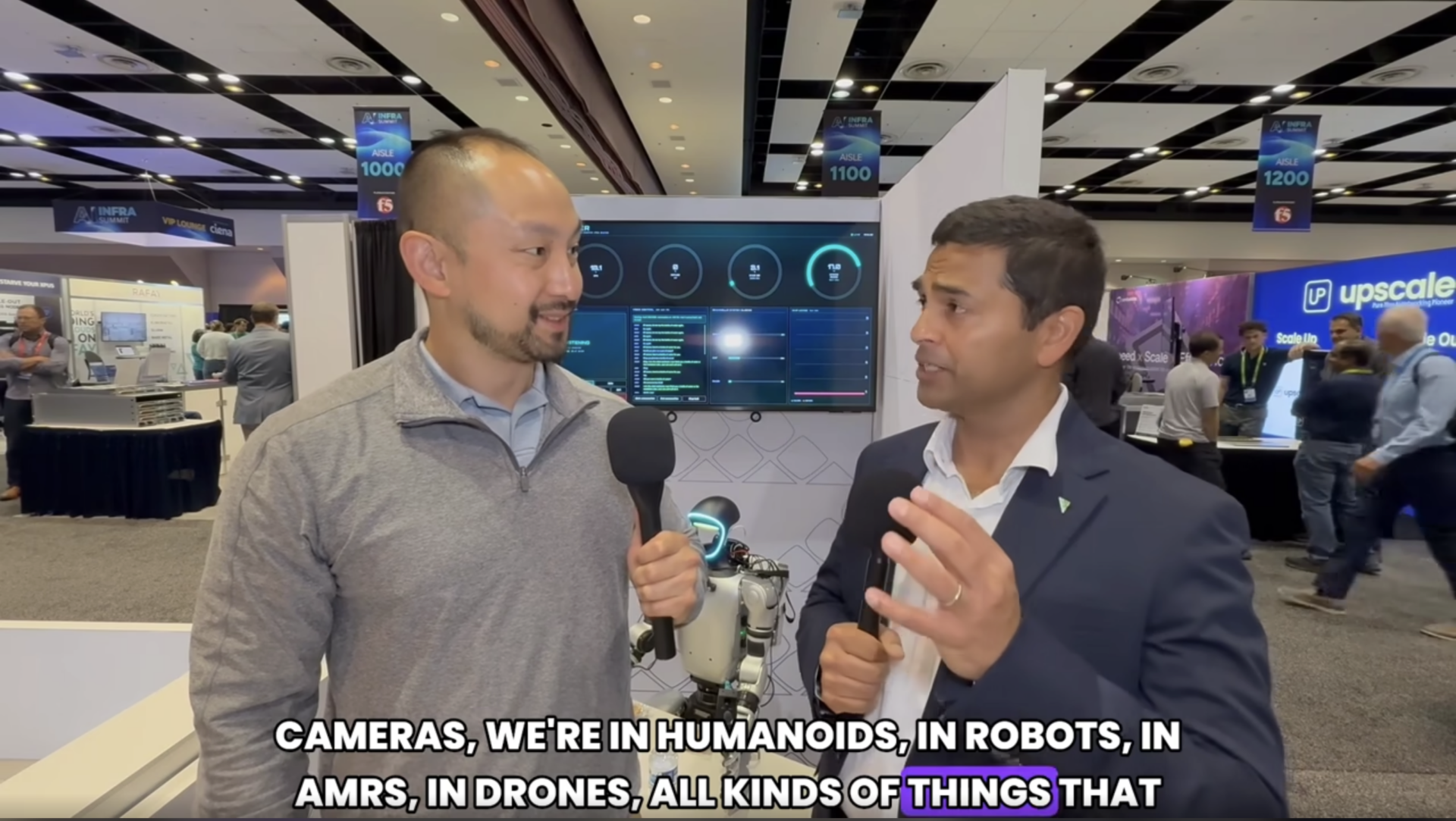
In another interview, Twill’s Raymond Lee spoke with Muneyb about what it takes to turn a successful Physical AI demo into infrastructure that can perform reliably in the real world. Their conversation focused on the requirements beyond the AI model itself, including safety, reliability, monitoring, software updates, and maintaining performance across fleets over years of operation. Muneyb also discussed how the new X7 accelerator can add AI processing alongside existing host computers without necessarily replacing installed equipment, and emphasized the importance of testing real workloads on real hardware while planning for the full deployment lifecycle.
With more than 50 million Ambarella AI processors already deployed, the conversations at AI Infrastructure Summit reinforced an important point: Physical AI is moving rapidly from experimentation toward production—and Ambarella is building the silicon, software, developer tools, and ecosystem needed to help customers make that transition.