Terms and Conditions for Cooper Software and Hardware
These Terms and Conditions for Cooper Software and Hardware (“Ts&Cs”) are made and entered into by and between Ambarella International LP, an Ontario, Canada limited partnership having a registered address at PO Box 309, Ugland House, Grand Cayman, KY1-1104, Cayman Islands (“Ambarella”), and you (as an individual person) or, where applicable, the entity you represent (“You” or “Your”). If you are an individual person acting on behalf of an entity, you represent that you have the authority to agree to these terms on behalf of the entity.
AMBARELLA IS WILLING TO LICENSE THE LICENSED MATERIAL (DEFINED BELOW) TO YOU ONLY ON THE CONDITION THAT YOU ACCEPT AND AGREE TO THESE TS&CS. BY CLICKING THE BUTTON LABELED “I AGREE” OR BY USING THE LICENSED MATERIAL, YOU ACKNOWLEDGE THAT YOU HAVE READ AND UNDERSTAND THESE TS&CS AND AGREE TO BE BOUND BY THEM. IF YOU DO NOT ACCEPT THESE TS&CS, AMBARELLA DOES NOT LICENSE THE LICENSED MATERIAL TO YOU, AND YOU SHALL NOT USE THE LICENSED MATERIAL. ANY USE OF THE LICENSED MATERIAL BY YOU IS SUBJECT TO THESE TS&CS.
You agree as follows:
1. Definitions
1.1 “Affiliate” means, in relation to an entity, any entity (i) Controlling, (ii) Controlled by, or (iii) under common Control with, such entity, but only for so long as such Control exists. “Control,” for the purposes of the preceding definition, means the ownership of or right to control more than 50% of voting securities of such entity.
1.2 “Cooper Model” means an artificial intelligence model provided by Ambarella or its Affiliate, either preloaded on a Developer Kit or made available for download from an Ambarella webpage.
1.3 “Cooper SDK OE Software” means the computer binaries, code, executables, firmware, instructions, Object Code, programs, software, or Source Code, but excluding Open Source Software, that You may download from an Ambarella webpage and may include operating systems, compilers, software development kits, tools (e.g., CVTOOLS) and sample applications. Cooper SDK OE Software also includes items developed or created by Ambarella in the course of performing any separately agreed-upon support or engineering services. Cooper SDK OE Software also includes Ambarella-provided updates, modifications, or error corrections of any of the foregoing.
1.4 “Cooper SDK OE Source Code” means portions of the Cooper SDK OE Software in Source Code form.
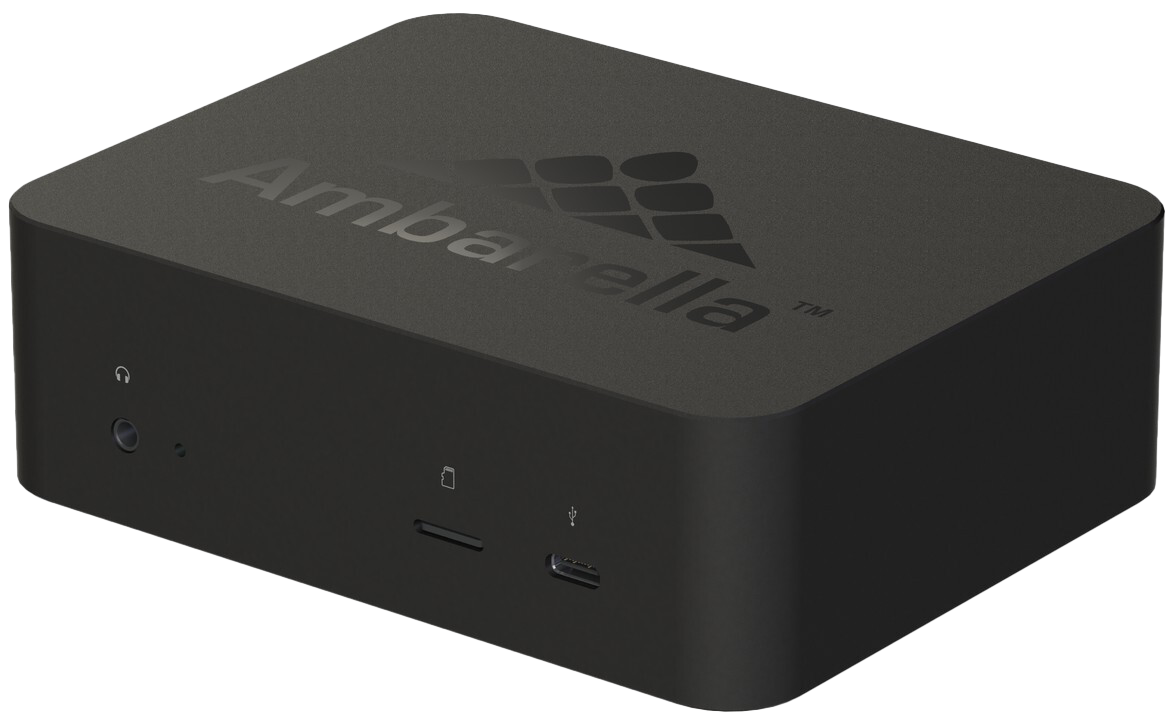
1.5 “Developer Kit” means a hardware development kit provided by Ambarella or its Affiliate, incorporating an Ambarella SoC, and intended for use by You to develop software application programs, including AI applications, that run on the Ambarella SoC. Examples of Developer Kits include Ambarella’s Cooper Mini Developer Kit, Cooper Max Developer Kit, and Cooper Pro Developer Kit.
1.6 “Documentation” means electronic or hardcopy manuals, designs, drawings, specifications, datasheets, slide decks, or documents received by You from Ambarella in connection with the Cooper Models, Cooper SDK OE Software or Developer Kit under these Ts&Cs.
1.7 “High Risk Decision Making” means employment or hiring, promotion or termination, creditworthiness or lending, insurance eligibility, educational admissions, housing eligibility, healthcare diagnosis or treatment, legal advice or legal determinations, public safety or law enforcement decisions, or any decision that may significantly affect an individual's rights or opportunities.
1.8 “Industry Standard(s)” shall mean technical or commercial standards adopted by organizations or consortia or generally recognized as an industry standard, including but not limited to MPEG, JPEG, M-JPEG, MP3, H.264/AVC, H.265/HEVC, AAC, AC3, Linux, 802.11 and 3G/4G wireless networking, FAT32 and exFAT formats, RTSP, I2S, PAL/NTSC, GMAC Ethernet, DDR/LP-DDR, SPI, USB, PCIe, HDMI (High-Definition Multimedia Interface), MIPI, I2C, SD (Secure Digital), HiSPi (High-Speed Serial Pixel Interface), UART (universal asynchronous receiver/transmitter), MP4, CAN bus (Controller Area Network), AVB (Audio Video Bridging), EXIF (Exchangeable image file format), ITU-R Recommendation BT.656, and ITU-R Recommendation BT.601 standards and their successor standards.
1.9 “Intellectual Property” means patents, certificates of invention, utility models, design rights, mask work rights, chip topographies and similar invention rights, copyrights, moral rights, database rights, trade secret rights and any other intangible property or proprietary rights recognized anywhere in the world under any local, state or national statute or treaty or common law right, including without limitation all applications and registrations with respect to any of the foregoing.
1.10 “Licensed Material” means the Cooper Models, Cooper SDK OE Software, Developer Kit, and Documentation.
1.11 “Licensed Product Software” means Object Code created by You that is based on, incorporates, or is output by the Cooper SDK OE Software and is designed to run on a Developer Kit. Licensed Product Software excludes the underlying Cooper SDK OE Software.
1.12 “Object Code” means code generated by compiling Source Code into a machine-readable form that can be executed by a processor or linked with libraries to create executable code.
1.13 “Open Source License Terms” means terms in any license for software which require, as a condition of use, modification or distribution of such software or other software incorporated into, incorporating, derived from, distributed or used in conjunction with such software (a “Work”), any of the following (i) the making available to any third party of Source Code, Object Code, or design information regarding the Work, (ii) the granting of permission to any third party for creating derivative works regarding the Work, or (iii) the granting of a license to any third party under Intellectual Property embodied in the Work. By means of example and without limitation, the following licenses and distribution models have Open Source License Terms: the GNU General Public License (GPL), the GNU Lesser or Library GPL (LGPL), the Mozilla Public License (MPL) or any similar open source, free software or community licenses.
1.14 “Open Source Software” means software that is subject to Open Source License Terms or licensed under a similar license agreement.
1.15 “Production Software” means an Object Code version of the Cooper SDK OE Software that is bundled with the Licensed Product Software and loaded into the Developer Kit.
1.16 “Safety Critical Applications” means autonomous vehicles, medical devices, industrial safety systems, critical infrastructure, weapons systems, or other safety-critical environments.
1.17 “Source Code” means computer program statements and declarations (and related documentation and comments) written by a human programmer in a high-level or assembly language that are not directly executable by a computer and that may be printed out, displayed, reviewed or edited in a form understandable by humans.
1.18 “Third Party Software” means portions of the Cooper Models or Cooper SDK OE Software that Ambarella licenses from a third party under a proprietary license and that are subject to such proprietary license.
2. License
2.1 General. The Licensed Material is licensed to You for use only as permitted by these Ts&Cs. Ambarella reserves all rights in the Licensed Material not expressly granted to You. The rights granted below are non-exclusive and limited in nature.
2.2 License Grant. Subject to Your continuing compliance with these Ts&Cs, Ambarella grants to You a limited, non-exclusive, non-assignable (except as permitted in Section 11.1) license under Ambarella’s Intellectual Property embodied in the Licensed Material, without the right to sublicense except as expressly permitted in Section 2.2.5, to:
2.2.1 use the Licensed Material to develop Licensed Product Software;
2.2.2 compile and modify the Cooper SDK OE Source Code to develop Licensed Product Software;
2.2.3 run and evaluate the Cooper Models on the Developer Kit;
2.2.4 develop derivatives of the Cooper Models, and run and evaluate the derivatives on the Developer Kit;
2.2.5 distribute to Your customers, subject to written obligations prohibiting reverse engineering that are at least as restrictive as Section 2.3.8, Production Software; and to sublicense to the customer the right to run and execute Production Software.
2.3 License Restrictions & Conditions. You agree that You shall not:
2.3.1 use, inspect, analyze, or otherwise exploit the Licensed Material outside the scope of the express license granted under Section 2.2 (License Grant);
2.3.2 use the Cooper Models, Cooper SDK OE Software or Developer Kit in violation of the Documentation or applicable law;
2.3.3 sell, sublicense, or otherwise provide the Licensed Material to any third party, except for the distribution of Production Software and the related sublicense expressly permitted under Section 2.2.5;
2.3.4 use the Licensed Material, or design or configure the Licensed Product Software to be used, with any integrated circuit other than the intended Ambarella SoC;
2.3.5 review or analyze the Licensed Material or any part thereof for the purpose of determining the infringement, validity, or enforceability of Your or any third party’s Intellectual Property;
2.3.6 cause any part of the Cooper Models or Cooper SDK OE Software to become Open Source Software;
2.3.7 modify, amend, adapt, translate, or otherwise prepare any derivative works of the Licensed Material except as permitted in Section 2.2;
2.3.8 reverse engineer, decompile, or disassemble the Cooper Models or Cooper SDK OE Software in Object Code form in any way for any purpose, including without limitation error correction;
2.3.9 attempt to defeat, avoid, bypass, remove, deactivate or otherwise circumvent any software protection mechanisms in the Cooper Models or Cooper SDK OE Software, including without limitation any such mechanism used to restrict or control the functionality of the Cooper Models or Cooper SDK OE Software;
2.3.10 attempt to derive the Source Code or the underlying ideas, algorithms, structure or organization from the Cooper Models or Cooper SDK OE Software;
2.3.11 use or enable any Industry Standard functionality included in the Licensed Material unless You first obtain and comply with any required licenses from the applicable standard setting organization or other applicable rights holder;
2.3.12 sell, distribute, rent, lease, license, lend, deploy or transfer the Developer Kit to any third party, or permit any third party to use or access the Developer Kit; or
2.3.13 use the Cooper Models for illegal activities, harmful conduct, cybersecurity abuse, privacy violations, intellectual property violations, misrepresentation, High Risk Decision Making, or Safety Critical Applications.
2.4 Notices. You shall not remove any product identification, proprietary, copyright or other notices contained in the Licensed Material. You shall reproduce such notices in all full or partial copies of the Licensed Material.
2.5 No Other Licenses. Except as expressly set forth in these Ts&Cs, no license or other right is granted by Ambarella to You, directly or by implication, estoppel or otherwise, and no such license or other right will arise from Your agreement to these Ts&Cs or from any acts, statements or dealings leading to such agreement.
3. Intellectual Property
3.1 Ownership. Ambarella or its licensors retain ownership of all Intellectual Property in and to the Licensed Material, and You shall not acquire any ownership rights in or to the Licensed Material. Any derivative works of the Licensed Material prepared by You are owned by Ambarella upon creation, and You hereby irrevocably assign to Ambarella all right, title, and interest in and to such derivative works, including all associated Intellectual Property. You agree to assist and cooperate in perfecting Ambarella’s ownership rights in such derivative works. Without limiting the foregoing, You shall not file any application or registration for any Intellectual Property relating to the Licensed Material or any derivative works thereof. You retain ownership of works prepared by You without use of the Licensed Material, including Licensed Product Software to the extent it does not constitute a derivative work of the Licensed Material.
3.2 No Obligation to Disclose Feedback. You have no obligation to disclose to Ambarella any feedback, suggestions, modifications, improvements, enhancements or derivative works of or relating to the Licensed Material (“Feedback”). However, if You disclose Feedback to Ambarella, You shall grant, and hereby do grant, to Ambarella and Ambarella’s Affiliates a non-exclusive, worldwide, non-terminable, royalty-free, transferable, sublicensable license to use, reproduce, prepare derivative works of, make, have made, import, offer for sale, sell, lease, distribute, publicly display, publicly perform, and otherwise exploit such Intellectual Property in or to any such Feedback in or with any Ambarella products or technology.
3.3 Third Party Infringement. You shall give notice to Ambarella, promptly on becoming aware of the same, of any actual or suspected infringement of or challenge to the Intellectual Property rights of Ambarella licensed to You under these Ts&Cs. You shall, at the expense of Ambarella, perform all actions and render all assistance as may be reasonably requested by Ambarella in any proceedings related to any such actual or suspected infringement or challenge.
4. Third Party Technology
4.1 The Cooper Models or Cooper SDK OE Software may include Third Party Software. If Ambarella provides the applicable third-party license terms, including on the Ambarella webpage from which You download the software, You shall comply with those terms. Certain Third Party Software may require You to obtain a license directly from the applicable third party before use. You are responsible for ensuring that Your use of Third Party Software complies with each applicable license agreement.
4.2 Portions of the software (including AI models) that Ambarella provides to You may be Open Source Software. The terms and conditions governing Your rights and obligations with respect to the Open Source Software are set forth in the license agreement indicated in the Open Source Software and not in these Ts&Cs. You understand and acknowledge that each Open Source Software license is a separate agreement between You and the copyright holder of such Open Source Software and that Ambarella may not be a party to any such Open Source Software license. Your use of the Open Source Software must comply with the terms of each applicable Open Source Software license. Examples of certain Open Source Software included in the Cooper SDK OE Software are listed in a file included with the Cooper SDK OE Software.
4.3 You acknowledge that You may need to obtain software from third parties to use or for use with the Cooper Models or Cooper SDK OE Software. It is Your responsibility to obtain and pay for any such required software.
4.4 Industry Standards. You acknowledge that Licensed Product Software may require licenses from certain standard setting organizations (“SSO”) and other third parties holding intellectual property rights essential to the published standards (including but not limited to the Industry Standards) implemented by the Cooper SDK OE Software. You acknowledge that no license is granted hereunder to such third party technology, and that You shall be responsible for procuring such license in connection with the use of such third party technology. If You use or implement an Industry Standard, e.g., HDMI or H.264, You shall obtain the appropriate license from the applicable SSO, e.g., HDMI Licensing Administrator, Inc. (https://www.hdmi.org/) or Via Licensing Alliance (https://via-la.com/), and comply with the license terms (including royalty reporting and payment terms) as needed. If You fail to obtain or comply with a required license and any SSO or other applicable rights holder asserts a claim against Ambarella, You shall indemnify, defend, and hold Ambarella and its Affiliates harmless from and against such claims, liabilities, damages, or expenses, including reasonable attorney’s fees.
5. Support
Ambarella has no obligation to provide support under these Ts&Cs. However, upon Your request, Ambarella may elect to provide limited support with respect to the Licensed Material, the nature and amount of which support shall be in Ambarella’s discretion. To the extent provided, this support is offered to You as a courtesy, and is accordingly contingent upon reasonable cooperation by You and is provided “as is,” without warranty.
6. Confidential Information
6.1 “Confidential Information” means, any business or technical information of Ambarella or its Affiliate, including without limitation know-how, whether or not patentable or copyrightable, that Ambarella directly or indirectly discloses to You. These Ts&Cs, the Licensed Material, and all Intellectual Property therein and thereto, and any information obtained, directly or indirectly, by You through inspection, review or analysis of the Licensed Material shall in any event be deemed to be the Confidential Information of Ambarella.
6.2 Exceptions. Confidential Information does not include any information that You can demonstrate by written records: (a) was known to You, without any confidentiality obligation, prior to its disclosure hereunder by Ambarella; (b) is independently developed by You without any use of or reference to Confidential Information; (c) is or becomes publicly known through no wrongful act by You; (d) has been rightfully received without any confidentiality obligation from a third party whom You have reasonable grounds to believe is authorized to make public disclosure without restriction; or (e) has been approved for public release by Ambarella’s prior written authorization. You may disclose Confidential Information to the extent required by applicable law, regulation, or order of a court or other government body, provided that, to the extent legally permitted, You give Ambarella prompt written notice before disclosure and cooperate with Ambarella’s efforts to seek a protective order or otherwise prevent or limit the disclosure.
6.3 Non-Disclosure and Non-Use. You shall: (i) not use Confidential Information except as permitted by these Ts&Cs; (ii) not disclose Confidential Information to any person or entity other than Your own employees (if applicable) who have a need to know and who have executed in advance of receiving Confidential Information suitable nondisclosure and restricted use agreements that comport with the applicable provisions of these Ts&Cs; and (iii) use all reasonable efforts to keep Confidential Information strictly confidential, but in no event less efforts than are accepted in the industry for protecting each type of Confidential Information. You are responsible for compliance by Your employees with the confidentiality, non-use, and non-disclosure terms stated herein. You shall immediately notify Ambarella of any unauthorized use or disclosure of, any unauthorized access to, or any theft or loss of any Confidential Information which You suspect or which comes to Your attention.
7. Term and Termination
7.1 These Ts&Cs commence when You accept them by clicking the button labeled “I Agree” or by first using the Licensed Material, whichever occurs first, and continue until terminated in accordance with this Section 7.
7.2 Termination for Breach. Ambarella may terminate Your rights under these Ts&Cs: (i) if You fail to cure any material breach, default or non-compliance with any term or condition hereof that is capable of cure within thirty (30) days after receiving notice of such breach, default or non-compliance, or (ii) upon notice in the event of a material breach, default or non-compliance by You that is not capable of cure.
7.3 Effect of Termination or Expiration. Upon any termination of Your rights under these Ts&Cs, all licenses granted to You herein will automatically cease, You shall immediately stop using the Licensed Material, and, unless otherwise expressly agreed in a written agreement signed by Ambarella, You shall promptly either return to Ambarella or, with Ambarella’s prior written consent, destroy to the satisfaction of Ambarella all Licensed Material, Confidential Information, and full or partial copies thereof that are in Your possession or control.
7.4 Survival of Certain Provisions. The following Sections of these Ts&Cs will survive any expiration or termination of these Ts&Cs: Sections 2.3 (License Restrictions & Conditions), 2.4 (Notices), 3 (Intellectual Property), 4.4 (Industry Standards), 6 (Confidential Information), 7.3 (Effect of Termination or Expiration), 7.4 (Survival of Certain Provisions), 8 (Warranty Disclaimer), 9 (Indemnification), 10 (Limitation of Liability) and 11 (General Provisions).
8. Warranty Disclaimer
8.1 AMBARELLA MAKES NO WARRANTY OR REPRESENTATION AS TO THE LICENSED MATERIAL OR ANY OTHER MATERIALS PROVIDED BY AMBARELLA HEREUNDER, ALL OF WHICH ARE PROVIDED TO YOU “AS IS” AND AMBARELLA DISCLAIMS ANY WARRANTY TO YOU OF ANY KIND, WHETHER EXPRESS, IMPLIED (EITHER IN FACT OR BY OPERATION OF LAW), STATUTORY OR OTHERWISE, INCLUDING BUT NOT LIMITED TO ANY WARRANTY WITH REGARD TO PERFORMANCE, MERCHANTABILITY, FITNESS FOR A PARTICULAR PURPOSE OR NONINFRINGEMENT OF THIRD PARTY RIGHTS.
8.2 AMBARELLA MAKES NO WARRANTY OR REPRESENTATION THAT THE COOPER MODELS OR COOPER SDK OE SOFTWARE WILL MEET YOUR REQUIREMENTS OR WORK IN COMBINATION WITH ANY HARDWARE OR APPLICATIONS SOFTWARE PROVIDED BY YOU OR THIRD PARTIES, THAT THE OPERATION OF THE COOPER MODELS OR COOPER SDK OE SOFTWARE WILL BE UNINTERRUPTED OR ERROR-FREE, OR THAT ANY DEFECTS IN ANY COOPER MODEL OR COOPER SDK OE SOFTWARE WILL BE CORRECTED.
9. Indemnification
9.1 Indemnification by You.
You shall indemnify, defend and hold Ambarella and its Affiliates harmless from any and all claims, liabilities, damages or expenses (including reasonable attorney’s fees) in connection with or which result from:
9.1.1 any claim of infringement of a third party’s intellectual property rights with respect to any Licensed Product Software, but excluding any such claim in either case to the extent it is based on the Licensed Material on a stand-alone basis,
9.1.2 any claim relating to Your use of the Licensed Material, except to the extent such claim is based on the Licensed Material on a stand-alone basis,
9.1.3 failure to obtain or comply with an applicable license from an SSO pursuant to Section 4.4 (Industry Standards),
9.1.4 failure by You to use the Licensed Material as intended or in conformance with the Documentation, or
9.1.5 breach of these Ts&Cs by You.
9.2 Ambarella shall promptly notify You in writing of any claim for which it seeks indemnification under this Section 9 and shall provide reasonable cooperation, at Your expense, in the defense of the claim. You shall control the defense and settlement of the claim, provided that You shall not enter into any settlement that admits liability by, imposes non-monetary obligations on, or fails to provide an unconditional release to any indemnified party without Ambarella’s prior written consent.
9.3 Nothing herein shall limit or restrict Ambarella’s or its Affiliates’ or suppliers’ rights to defend and protect their ownership and intellectual property rights in and to the Licensed Material, in whole or in part, in connection with any claim.
10. Limitation of Liability
10.1 IN NO EVENT WILL AMBARELLA BE LIABLE TO YOU FOR LOSS OF PROFITS OR GOODWILL, OR ANY SPECIAL, INDIRECT, INCIDENTAL, RELIANCE, CONSEQUENTIAL OR PUNITIVE DAMAGES, HOWEVER CAUSED AND WHETHER ARISING FROM CONTRACT, TORT, NEGLIGENCE OR ANY OTHER LEGAL OR EQUITABLE THEORY OF LIABILITY, ARISING IN ANY WAY IN CONNECTION WITH THESE TS&CS.
10.2 IN NO EVENT WILL AMBARELLA’S TOTAL AGGREGATE LIABILITY ARISING IN ANY WAY IN CONNECTION WITH THESE TS&CS, THE LICENSED MATERIAL, OR ANY OTHER MATERIALS PROVIDED BY AMBARELLA HEREUNDER EXCEED ONE HUNDRED U.S. DOLLARS ($100). THE LIMITATIONS IN THIS SECTION 10 WILL APPLY EVEN IF AMBARELLA HAS BEEN ADVISED OF THE POSSIBILITY OF SUCH DAMAGES AND NOTWITHSTANDING ANY FAILURE OF ESSENTIAL PURPOSE OF ANY LIMITED REMEDY.
10.3 To the maximum extent permitted by applicable law, no action or proceeding arising out of or relating to these Ts&Cs, the Licensed Material, or any other materials or services provided by Ambarella may be commenced by You more than one (1) year after the cause of action accrues. This limitation applies notwithstanding any longer period otherwise provided by law.
11. General Provisions
11.1 Assignment. Neither all nor any part of Your rights or obligations under these Ts&Cs are assignable or transferable by You, whether directly or indirectly, by merger, acquisition, change of Control, operation of law or otherwise, without the prior written consent of Ambarella and any attempt to do so shall be void. Ambarella has the right to freely assign all or part of its rights and obligations under these Ts&Cs, including without limitation to any Affiliate of Ambarella. Subject to the foregoing, the provisions of these Ts&Cs shall be binding upon and inure to the benefit of You and Ambarella and Your and Ambarella’s respective successors and permitted assigns.
11.2 Notice.
11.2.1 You shall serve notice upon Ambarella at the following address: c/o Ambarella Corp., Attn: General Counsel, 3001 Tasman Dr, Santa Clara, CA 95054 United States
11.2.2 Any notice required under these Ts&Cs shall be in writing and signed by You. Notice may be sent by electronic mail to LEGAL-NOTICES@AMBARELLA.COM and shall be effective when received. Ambarella may request a copy by first-class mail, commercial overnight courier, or equivalent service for verification purposes.
11.3 Severability. If any paragraph or provision of these Ts&Cs shall be found to be void or invalid as a matter of law, such paragraph or provision will be enforced to the maximum extent permissible so as to effect the intent of You and Ambarella, and the remaining paragraphs or provisions of these Ts&Cs shall nevertheless remain in full force and effect.
11.4 Waiver. No failure, relaxation, forbearance, delay or negligence by Ambarella hereto in enforcing any of these Ts&Cs, or the granting of time by Ambarella to You, shall operate as a waiver or prejudice, affect or restrict the rights, powers or remedies of Ambarella.
11.5 Complete Agreement. These Ts&Cs represent the full and complete agreement and understanding by You with respect to the subject matter hereof, and supersede and replace all prior and contemporaneous understandings or agreements, whether oral, written or otherwise, regarding such subject matter. You acknowledge that You have not relied upon and, except in the case of fraud, shall have no remedy in respect of any draft agreement, warranty, promise, assurance, arrangement, representation or statement, whether or not in writing, relating to the subject matter of these Ts&Cs made or given by any person at any time except as specifically set forth in these Ts&Cs.
11.6 Independent Contractors. You and Ambarella are independent contractors. There is no relationship of partnership, joint venture, employment, franchise or agency between You and Ambarella. Ambarella is not liable for any of Your debts, accounts, obligations or other liabilities. You are not authorized to bind Ambarella or incur any debts or other obligations of any kind on the part of or as agent for Ambarella except as may be specifically authorized in writing.
11.7 No Third Party Beneficiaries. Unless otherwise expressly provided in these Ts&Cs, no provisions of these Ts&Cs are intended to or shall be construed to confer upon any person or entity other than You and Ambarella any rights, remedies or other benefits under or by reason of these Ts&Cs.
11.8 Governing Law, Jurisdiction & Venue. All questions of law, rights and remedies regarding any act, event or occurrence undertaken in connection with these Ts&Cs shall be governed by and construed in accordance with the laws of the State of California, without regard to or application of choice of law rules or principles, and of the United States. The United Nations Convention on Contracts for the International Sale of Goods shall not apply. You agree that all actions, proceedings, disputes and claims concerning the interpretation or the performance of these Ts&Cs, including without limitation questions involving their existence, validity and duration shall be resolved by courts in Santa Clara County, California, and You consent to the exclusive jurisdiction and venue of such courts.
11.9 Compliance with Laws. You agree to comply with, and to cooperate for Ambarella to comply with, all applicable export and reexport control laws and regulations, including the Export Administration Regulations (“EAR”) maintained by the United States Department of Commerce. You covenant that You shall not, directly or indirectly, sell, export, reexport, transfer, divert, or otherwise dispose of the Licensed Material, Licensed Product Software or any other software, source code, or technology received from Ambarella under these Ts&Cs (and any derivatives of the foregoing) to any country (or any individual national thereof) subject to antiterrorism controls or U.S. embargo, or to any other person, entity, or destination prohibited by the laws or regulations of the United States, without obtaining prior authorization from the competent government authorities as required by those laws and regulations.
11.10 Remedies Cumulative. Except as expressly provided herein, all rights and remedies enumerated in these Ts&Cs will be cumulative and none will exclude any other right or remedy permitted herein or by law or in equity.
11.11 Equitable Relief. You agree that Your breach of Section 2, 3, or 6 would cause Ambarella irreparable harm. Accordingly, without limiting its other remedies, Ambarella shall have the right to obtain equitable relief for Your breach of such sections without the requirement of establishing irreparable harm or posting of a bond.
11.12 Force Majeure. Ambarella shall not be responsible or liable to You for nonperformance or delay in performance of any of these Ts&Cs due to acts or occurrences beyond the reasonable control of Ambarella, including but not limited to, acts of God, acts of government, wars, riots, strikes or other labor disputes, fires and floods, provided Ambarella provides to You written notice of the existence and the reason for such nonperformance or delay.
11.13 Headings. The headings contained in these Ts&Cs are inserted for convenience of reference only and are not intended to be a part of or to affect the meaning or interpretation of these Ts&Cs.
11.14 Language. These Ts&Cs are in the English language and any versions of these Ts&Cs in any other language shall not be binding on Ambarella. All communications and notices to be made or given pursuant to these Ts&Cs shall be in the English language.
Ambarella may retain records evidencing Your acceptance of these Ts&Cs, including Your name, email address, organization, date and time of acceptance, IP address or other authentication information, and the version of the Ts&Cs accepted. Such records will be deemed evidence of Your acceptance of and agreement to these Ts&Cs and will be processed in accordance with Ambarella’s applicable privacy notice.
To express Your agreement to the terms and conditions herein, including on behalf of any entity You represent, please click on the button labeled “I Agree.”
After You click the button labeled “I Agree,” Ambarella may generate and retain a written record of Your acceptance that identifies the version of these Ts&Cs accepted and the associated acceptance information described above.
Ambarella – October 2026



 Blog
Blog
 Blog
Blog
 Blog
Blog
 Blog
Blog
 Blog
Blog
 Blog
Blog
 Blog
Blog
 Blog
Blog
 Blog
Blog
 Blog
Blog